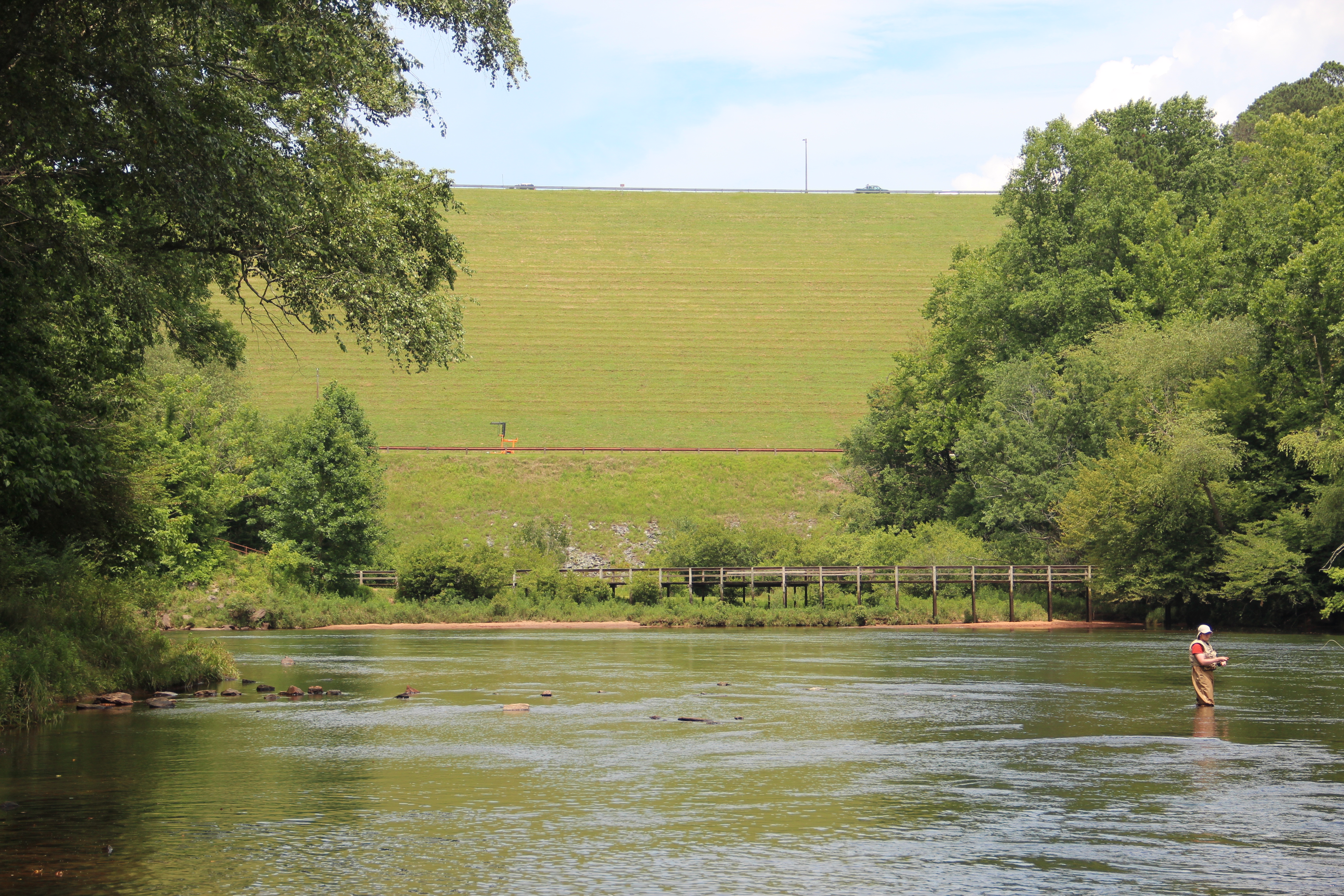
Falling reservoir levels are prompting water conservation measures across the river system that supplies the Chattahoochee through Sandy Springs.
WABE’s Nov. 9 report describes reduced releases into Florida’s Apalachicola River to preserve upstream storage. Lake Lanier was more than eight feet below its 1,071-foot benchmark. Regional water planning director Danny Johnson told the station that metro Atlanta was not facing an immediate water shortage.
How drought operations work
The U.S. Army Corps of Engineers’ operating manual ties drought operations to combined storage in Lake Lanier, West Point Lake and Walter F. George Lake. Lanier’s elevation alone does not determine when those measures begin.
The reservoirs serve multiple purposes, including water supply and maintaining downstream flows. Drought operations allow the Corps to conserve storage while continuing required releases.
November’s measures follow earlier drought operations this year. In a May 5 announcement, the Corps said federal drought operations in the Apalachicola-Chattahoochee-Flint basin began May 1.
Rainfall deficit has accumulated
A Lake Lanier Association analysis illustrates the prolonged shortfall. Using National Weather Service station data, association Vice President and Secretary Clyde Morris calculated that Gainesville received approximately 92.2 inches of rain from August 2024 through August 2026, compared with a historical normal of about 111.4 inches.
That left a deficit of roughly 19.3 inches over 25 months.
September 2024 brought 10.22 inches for the entire month, largely because of Hurricane Helene. Other wet periods provided temporary relief without erasing the accumulated deficit.
Winter outlook offers hope
NOAA’s winter outlook, released Oct. 15, favors above-average precipitation across the Southeast during December through February as El Niño influences weather patterns.
The accompanying drought outlook anticipates improvement or an end to drought across the Southeast. Those forecasts describe seasonal probabilities, however, rather than a guaranteed date for rainfall or reservoir recovery.
For Sandy Springs households, conservation remains the immediate takeaway. Georgia EPD’s drought guidance continues to list a statewide Level 1 response, which requires public water systems to communicate drought conditions and encourage conservation.
The normal landscape-watering schedule remains in effect, generally allowing irrigation before 10 a.m. and after 4 p.m., with exceptions for certain uses.