Sandy Springs is spending $223,750 to figure out how to make Roswell Road safer, after city data revealed the corridor accounted for more than a third of all crashes on local streets over five years.
The City Council awarded the contract to engineering firm Gresham Smith on Tuesday, July 21. The study covers both sides of Roswell Road from Hammond Drive to Cliftwood Drive, a stretch the city's own Safety Action Plan ranked as Sandy Springs' No. 2 high-injury network.
Public Works Director Marty Martin said the project will pinpoint locations for safety and operational improvements. Full implementation could take five to 15 years.
Why it matters for commuters
Sandy Springs is home to roughly 132,000 jobs, but only about 6% are held by city residents, according to the draft Transportation Master Plan presented to City Council on June 16. That means roughly 124,000 workers drive in daily through corridors like GA-400, I-285, and Roswell Road to reach Perimeter Center offices, Northside Hospital, and retail strips along Hammond Drive.
Between 2020 and 2024, the city recorded 11,649 crashes on surface streets alone, excluding the interstates, according to the same plan. Nearly 90% occurred along just 10 corridors. Roswell Road also accounted for more than 40% of pedestrian crashes in that period, including two pedestrian fatalities.
Statewide, the picture is worsening. Georgia recorded 1,797 traffic deaths in 2025, a 7% increase over 2022, according to S3 Magazine. Patch reported Monday, July 27, that the I-285/GA-400 interchange carries an estimated 310,000 vehicles per weekday, though that figure could not be independently confirmed against GDOT traffic counts. GDOT's own 2024 data put SR 400 alone at 185,000 vehicles per day in Sandy Springs.
What's in the pipeline
The largest project aimed at easing the bottleneck is the $4.6 billion SR 400 Express Lanes, now under heavy construction. SR 400 Peach Partners, a consortium led by Paris-based Meridiam, holds a 56-year contract to add two managed toll lanes in each direction from the North Springs MARTA Station to Forsyth County. The Sandy Springs segment is projected to open in February 2031, according to GDOT's February 2026 update.
The project is privately financed through bond sales, developer equity, a $3.9 billion federal loan, and a $120 million state contribution. The consortium collects nearly all toll revenue for 50 years, after which the lanes become state property. A Bus Rapid Transit line from North Springs to Alpharetta is included.
Meanwhile, the I-285 Top End Express Lanes, which would run elevated above the existing roadway north to Abernathy Road, was still seeking construction bids as of March 2026.
Political tension over priorities
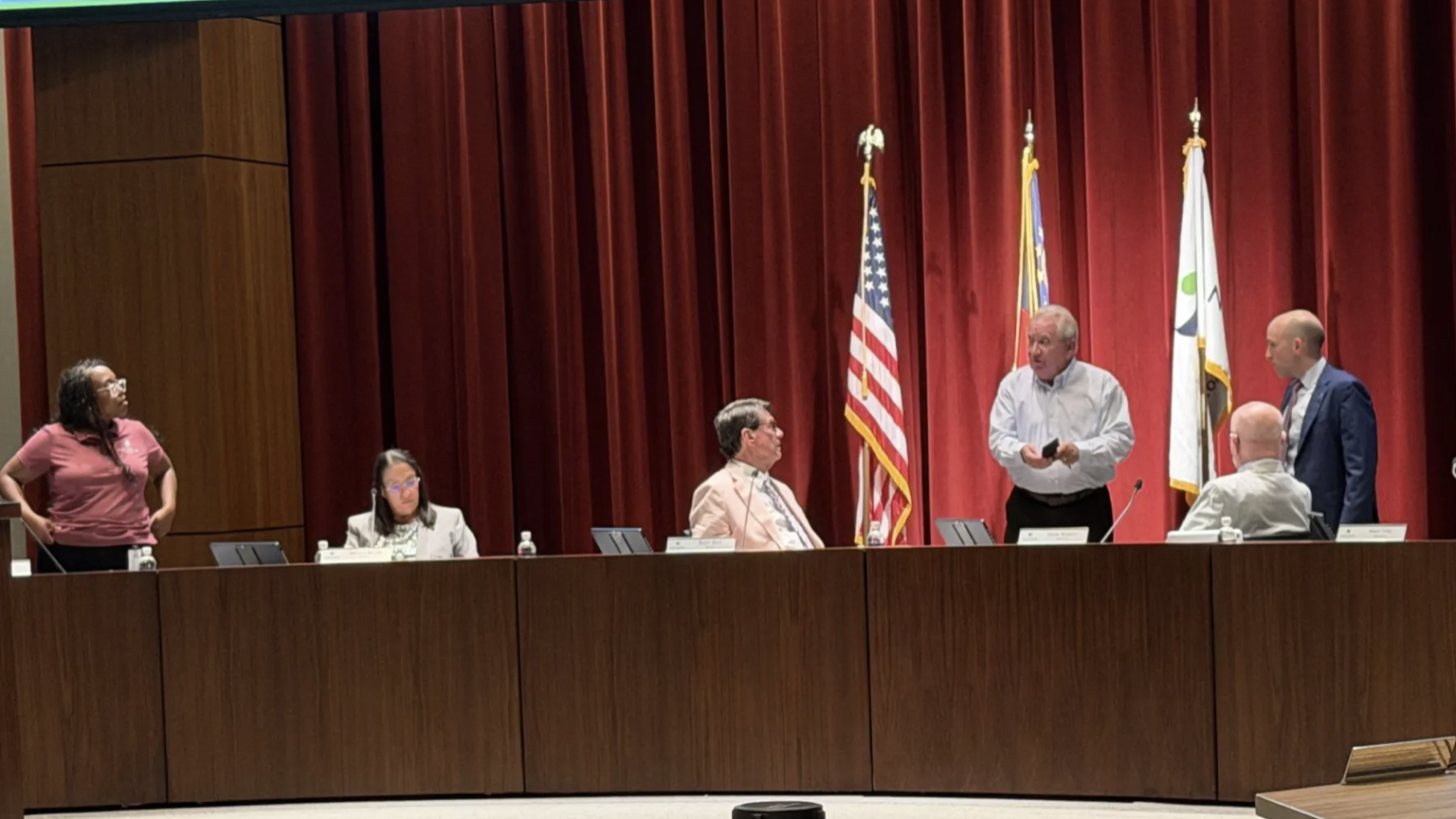
"I'm hesitant to keep spending so much on car-oriented travel thinking it's going to solve the traffic problem when it's not going to," Councilman Andrew Chinsky said at the June 16 City Council meeting, when the draft Transportation Master Plan was presented. "We have to provide people other ways to get around and also help people stop driving through Sandy Springs."
The plan proposes more than $250 million in transportation investments over the next decade, according to the draft document: $117 million from 2027 to 2031 and $162 million from 2032 to 2036. Much of that funding depends on a proposed third round of Fulton County's TSPLOST, which goes before voters in November.