Students at North Springs High School, Riverwood International Charter School and the rest of Fulton County's roughly 100 campuses will no longer eat locally sourced produce and meat in their cafeterias after the district dropped contracts with area farmers this summer.
Alyssia Wright, executive director for school nutrition at Fulton County Schools, confirmed the cuts in an interview published by Rough Draft Atlanta on Wednesday, Aug. 26. The district had been using a federal grant to subsidize purchases of local fresh fruits, vegetables and meat, but that funding disappeared when the Trump administration terminated the USDA's Local Food for Schools Cooperative Agreement Program in March 2025.
The LFS program funneled more than $1 billion nationally to schools in 2024. Its replacement, the $18 million Patrick Leahy Farm to School Grant Program announced in September 2025, covers a fraction of that total. On Monday, Aug. 24, the USDA announced a separate "Harvest to Hallways" initiative pledging $25 million in additional farm-to-school grants and $50 million for kitchen equipment, but advocates say the combined efforts still leave a roughly $1 billion gap.
DeKalb County School District director of school nutrition Condus Shuman, who confirmed parallel cuts at DeKalb schools, said the districts had been receiving a grant for local fresh fruits and vegetables under the LFS program that allowed them to subsidize costs, but that funding was lost under the current presidential administration.
What it costs to feed 41,000 kids
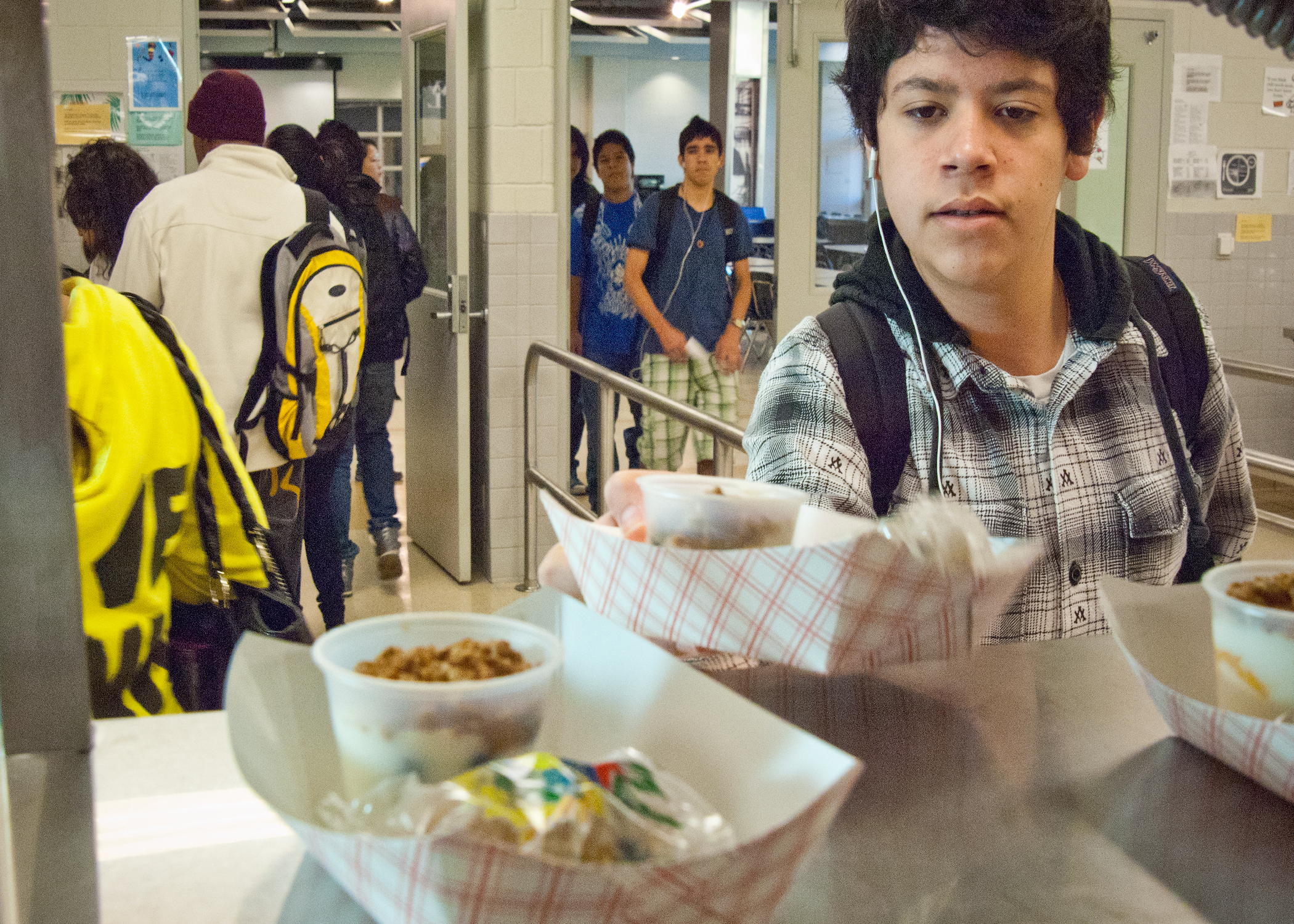
Fulton County Schools serves lunch to approximately 41,000 students daily across 93 self-operating kitchens. During the 2025-26 school year, producing one lunch plate cost the district $5.20, including labor and equipment. The maximum a student pays is $3.35, leaving a $1.85-per-meal gap the district absorbs.
That math sits inside a broader budget squeeze. The Fulton County Board of Education in June adopted a $2.3 billion budget for 2026-27 that carries a $56.9 million deficit. The district's FY2026 budget allocated $59.4 million for school nutrition and listed raising meal prices as one cost-management step.
Chief Financial Officer Marvin Dereef told the board at its June 21 meeting that the district "… successfully reduced an initial projected budget gap of approximately $95 million down to $57 million while maintaining core services."
Quality pledge, fewer options
Wright, who has worked in education for roughly 20 years, said she remains committed to students' plates despite the financial pressure.
"Sometimes I sacrifice costs to provide them something that they want because if they eat it, then, of course, the ultimate goal is that they will be nourished and ready for school," Wright said.
The district still runs an annual Student Choice Food Challenge that lets students vote on menu items. Chicken ramen and pizza remain top picks across grade levels.
But the loss of local farm partnerships means cafeterias will rely more heavily on conventional supply chains for the produce and protein that once came from nearby growers.
The federal funding picture could tighten further. A July 2026 Center for American Progress report indicated Georgia children may lose additional meal subsidies under the One Big Beautiful Bill Act's SNAP overhaul, which has already caused 1.5 million children nationwide to lose food stamps, according to CBS News.